Noise Dosimetry vs Area Noise Monitoring: Factory Guide
🌱 Last updated: September 22, 2026
Your factory already measures noise near machines and across the production floor. But do those readings tell you what individual workers experience throughout their duties?
A maintenance worker may enter a compressor room briefly, move to a packaging line and then return to a quieter workshop. A reading taken inside the compressor room describes that location under the conditions measured. It does not, by itself, establish the worker’s daily exposure.
Area noise monitoring helps identify where noise occurs. Personal noise dosimetry measures exposure as a worker performs activities over time.
Each approach has a limitation worth understanding:
Area readings need task and duration information before they can support conclusions about individual exposure.
Personal dosimetry needs supporting observations to help explain which activities or sources contributed to the result.
Your factory may benefit from either approach or a combination. The right choice depends on the question the assessment needs to answer.
Noise Dosimetry vs Area Noise Monitoring: Comparison
Aspect
Area noise monitoring
Personal noise dosimetry
Main objective
Characterise noise at selected locations or during activities
Assess a worker’s exposure over a monitoring period
Typical instrument
Suitable sound level meter, often with integrating or logging capability
Wearable noise dosimeter
Measurement position
Selected survey points or positions relevant to the assessment
Near the worker’s ear, following the measurement method
Worker movement
Addressed through observations and activity-duration information
Instrument accompanies the worker
Typical outputs
Location-based levels, equivalent levels and survey maps, depending on scope
Dose or exposure levels, depending on settings and instrument capabilities
Useful applications
Identifying noisy areas, investigating sources and supporting control planning
Assessing mobile workers and variable exposure patterns
Main limitation
Location readings alone may not establish personal exposure
A personal result alone may not identify the contributing source
Important supporting information
Equipment operation, measurement positions and operating conditions
Tasks, locations, duration, interruptions and operating conditions
Area monitoring is not restricted to instantaneous spot readings. Suitable instruments can integrate noise over time or record longer periods. The distinction is the measurement strategy and purpose, rather than simply how long an instrument runs.
Area noise monitoring measures sound at selected positions within a workplace or other defined area.
Depending on the objective, the assessment may include measurements:
Near operating machinery.
At workstations.
Along access routes.
Inside utility rooms.
Across a production floor.
At positions selected to investigate a particular source.
The results describe the locations, periods and operating conditions assessed.
A measurement taken beside an idle machine will not describe the same conditions as a measurement taken while it operates under load. The report should make these conditions clear.
When Is Area Noise Monitoring Useful?
Identifying Noisy Areas and Planning Further Assessment
An area survey can help identify where more detailed investigation is needed.
For example, a production-floor survey may show that readings change when a second packaging line starts or when compressed-air cleaning occurs nearby. These observations help define the next assessment question.
An initial survey can therefore guide the selection of locations, tasks or workers for further monitoring.
Preparing Noise Maps and Investigating Sources
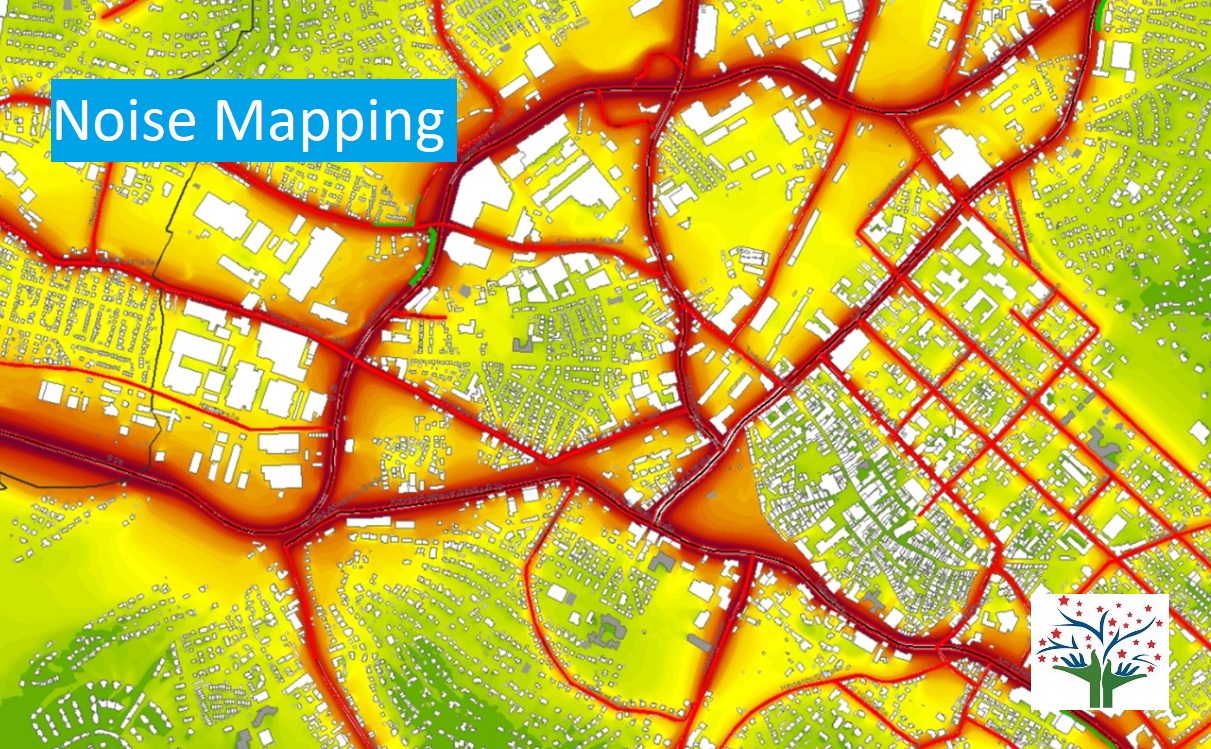
Measurements can be plotted on a factory layout to show differences across the surveyed area.
A useful map identifies relevant machinery and the operating conditions during measurement. For example, it may distinguish readings near a press, along the operator walkway and at an adjacent workstation.
However, a map represents the surveyed conditions. Changes in equipment, layout or production may change the noise pattern.
Source investigation can require additional measurements. A general noise map does not necessarily provide the frequency information needed to design an enclosure or select a silencer.
Reviewing a Noise-Control Measure
Area measurements can help assess changes after maintenance, installation of an enclosure or another intervention.
For a meaningful before-and-after comparison, consider:
Measurement positions.
Machinery loading and production rate.
Nearby equipment operation.
Doors, openings and enclosure condition.
Measurement duration and settings.
A lower reading is more persuasive evidence of improvement when the comparison conditions are sufficiently consistent.
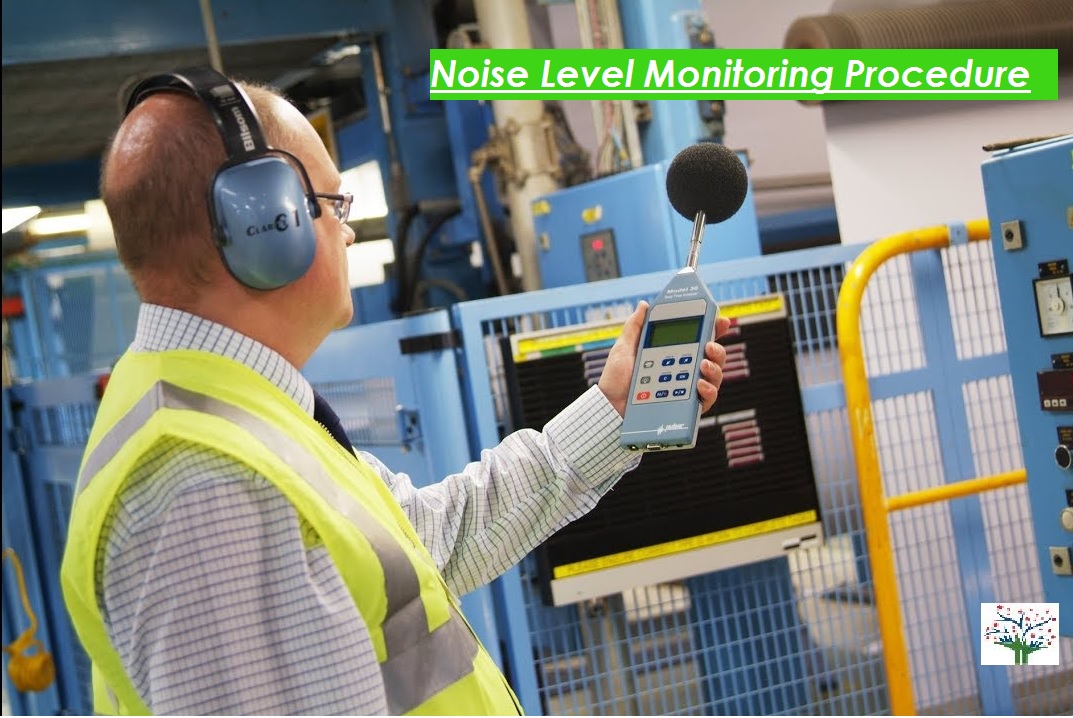
Personal noise dosimetry measures a worker’s exposure over a defined period using a wearable instrument.
The microphone is positioned near the ear according to the instrument instructions and assessment method. The worker carries out representative duties while the dosimeter records exposure.
Depending on the instrument and configuration, outputs may include dose percentage, average levels or time-history information.
The results need to be interpreted alongside the measurement settings, monitoring duration and activities performed.
A dose percentage without that context provides an incomplete picture.
When Is Personal Noise Dosimetry Useful?
Workers Move Between Locations
Maintenance workers, material handlers and supervisors may encounter several sources during their duties.
Their exposure depends on the levels encountered and time spent on activities. Personal monitoring can help capture this changing pattern.
Tasks Produce Different Exposure Conditions
A worker may alternate between inspection, cutting, cleaning and packing. Exposure can vary significantly even if much of the work occurs within one department.
Dosimetry can assess the monitored period, while a task log helps explain changes in the recording.
Activities Are Difficult to Predict
Breakdowns, changing assignments and intermittent operations can make exposure difficult to reconstruct from a limited set of location measurements.
The sampling plan should consider whether the monitored activities are representative and whether additional workers or days are needed.
The Assessment Concerns Particular Job Roles
Personal monitoring can provide evidence about selected workers or groups with similar exposure patterns.
However, workers with the same designation may operate different equipment, perform additional duties or follow different routes. Their exposure should not be assumed identical solely because their job titles match.
Can Area Measurements Be Used to Assess Worker Exposure?
Yes. Representative sound level measurements and reliable activity-duration information can support an occupational exposure assessment under an appropriate method.
For example, a worker may perform clearly defined tasks at known locations for documented durations. An assessor may be able to measure those activities and combine their exposure contributions.
This can be a legitimate assessment strategy. Personal dosimetry is not the only possible method.
The approach becomes more difficult when:
Tasks are unpredictable: Assignments change throughout the day.
Durations are uncertain: Time spent in different areas is poorly documented.
Noise varies within activities: Short measurements miss important operating cycles.
Positions differ: The worker’s actual location is not represented by the measurement point.
Activities are omitted: Cleaning, maintenance or other relevant duties are excluded.
The aim is a representative assessment with justified assumptions, rather than a rule that one instrument is always better.
When Should a Factory Consider Both Methods?
A combined study is useful when you need to understand worker exposure and where to investigate controls.
Area measurements provide location and source context. Personal dosimetry assesses selected workers during relevant duties. Activity records help connect the findings.
The following scenarios are illustrative and are not Perfect Pollucon project records.
Factory situation
Assessment approach to discuss
Maintenance worker visits several utility rooms
Personal monitoring, task records and selected area measurements
Operator remains at a workstation with predictable duties
Representative task or location measurements, with dosimetry where needed
Packaging lines operate in different combinations
Measurements under relevant operating conditions and an appropriate worker-exposure assessment
New enclosure installed around equipment
Comparable area measurements; personal monitoring if worker exposure is also being evaluated
Grinding occurs intermittently
Task measurements and duration information, potentially supported by dosimetry
Concern relates to noise outside the premises
A separate environmental or boundary-noise assessment
Both methods are not necessary for every enquiry. The combined scope should address a specific information need.
Example: Two Workers Enter the Same Compressor Room
Worker A performs brief inspections and spends most of the day elsewhere. Worker B carries out an extended maintenance activity inside the room.
An area reading describes the compressor-room conditions measured. To assess either worker’s daily exposure, the assessor also needs information about time spent there and the remaining duties.
If the work is predictable, representative measurements and duration records may support the assessment. Where movement and tasks vary substantially, personal dosimetry may be especially useful.
If Worker B’s exposure warrants investigation, further source information may still be needed to identify suitable engineering controls.
The measurement approach follows the decision being made: assessing exposure, investigating a source or evaluating a control.
Workplace Noise and Boundary Noise Are Different Assessments
“Noise monitoring” can refer to several purposes.
Assessment purpose
Main concern
Personal occupational exposure
Noise experienced by workers during their duties
Workplace area assessment
Noise at machines, workstations and operational locations
Environmental or boundary assessment
Noise at relevant external locations under applicable requirements
These assessments may use related equipment, but the measurement locations, methods and interpretation can differ.
An acceptable boundary result does not establish acceptable worker exposure inside the factory. Similarly, a personal dosimetry result does not establish compliance at the boundary.
Applicable Indian occupational requirements and environmental noise requirements must be considered separately. International guidance should not be presented as Indian law.
Does Personal Dosimetry Always Require Eight Hours?
No. A complete eight-hour recording is not universally mandatory.
The monitoring period should suit the objective, work pattern and selected assessment method.
Shorter representative measurements may be appropriate in some circumstances. Variable activities may require longer monitoring, multiple samples or repeated assessments.
An eight-hour reference period used to express exposure is different from eight hours of actual recording.
The same principle applies to area monitoring: there is no single duration suitable for every measurement. The sampling period must capture the conditions relevant to the assessment.
ISO 9612:2025 provides a methodology for occupational noise exposure assessment. Where selected, its detailed requirements should guide the study.
Which Approach Is More Accurate?
Accuracy depends on the equipment, configuration, measurement technique and sampling strategy.
A well-conducted area measurement can accurately describe sound at its selected position but still be insufficient to describe a mobile worker’s exposure.
Likewise, a dosimeter can record a worker’s activities accurately during one period while missing important duties performed at another time.
Ask two separate questions:
Was the measurement technically valid?
Did the measurement represent the exposure or condition being assessed?
Longer recording alone does not resolve poor positioning, unsuitable settings or unrepresentative operating conditions.
Does Either Method Measure Hearing-Protector Performance?
A microphone outside hearing protection measures sound at its position. It does not directly establish the level reaching the ear beneath earplugs or earmuffs.
Exposure measurements can inform hearing-conservation decisions, but evaluating protection requires consideration of attenuation, fit and actual use.
Required hearing protection should remain in use during monitoring.
Activities involving impacts may require attention to peak sound pressure as well as time-averaged exposure.
The selected instrument and configuration must support the parameters needed for the assessment.
A maximum reading obtained with Fast or Slow time weighting is not interchangeable with a true peak measurement. Similarly, neither the label “sound level meter” nor “dosimeter” confirms that an instrument can measure every required parameter.
When enquiring about an assessment, mention activities such as hammering, stamping or other impact processes so that equipment suitability can be considered.
How to Choose the Right Assessment
Discuss these five questions with your monitoring provider.
1. What Do We Need to Know?
Clarify whether the concern is:
Noise at a location.
Exposure of a worker or job group.
A suspected source.
Effectiveness of a control.
Environmental noise outside the workplace.
“Noise testing” alone may not define the required scope.
2. Where Do Workers Spend Their Time?
Describe whether they remain at fixed stations, carry out defined tasks or move unpredictably.
This determines how much location and duration information is needed.
3. How Do Conditions Change?
Consider production cycles, maintenance, equipment combinations, shift differences and intermittent activities.
The study should address the conditions relevant to the decision.
4. What Evidence Already Exists?
Previous surveys, task durations, machinery details and earlier exposure results can help identify gaps.
Existing information should be checked for relevance before being reused.
5. What Must the Report Support?
An internal risk assessment, a customer specification and a control-design investigation may need different deliverables.
Agree the intended outcome before selecting the number of points, workers or monitoring days.
What to Check in a Quotation
Compare quotations against the same objective, rather than simply comparing the number of readings.
Look for clarity on:
Coverage: Locations, workers, tasks and shifts included.
Method: Measurement approach and assessment criterion.
Duration: Planned sampling and treatment of unmonitored periods.
Parameters: What the equipment will measure and report.
Supporting records: Task observations and operating conditions.
Deliverables: Results, interpretation, limitations and recommendations.
Additional work: Whether mapping, frequency analysis or repeat monitoring is included.
A lower-cost study may be appropriate if it answers the required question. It is poor value if it produces a report that cannot support the intended decision.
Information to Share When Requesting a Study
Provide:
Facility location: Address and access arrangements.
Operations: Main processes and relevant machinery.
Job roles: Duties, movement and task patterns.
Shift details: Duration, breaks and meaningful differences between shifts.
Reason for the assessment: What prompted the enquiry.
Existing records: Previous noise reports or maps.
Site restrictions: Hazardous-area, hygiene and equipment requirements.
Required outcome: The question the report should answer.
If an audit or customer specification only says “noise monitoring,” clarify whether it refers to area measurements, personal exposure, environmental monitoring or a combination.
Planning Your Assessment With Perfect Pollucon LLP
Perfect Pollucon LLP supports industrial noise assessments in Thane, Mumbai, Navi Mumbai and surrounding areas.
The scope should reflect your facility’s work patterns and the decision you need to make. This may involve location-based monitoring, personal exposure assessment or a combination.
Share your processes, job roles and existing information when requesting an assessment. This helps define the measurement scope and reporting requirements before site work begins.
We already have a noise map. Do we still need personal dosimetry?
Review whether the map and available task-duration information adequately describe workers’ exposure. Dosimetry may help where movement, variable activities or uncertain time patterns leave gaps.
Can one dosimeter result represent an entire department?
That depends on the sampling strategy and similarity of exposure conditions. Differences in tasks, machinery, locations or shifts may require additional measurements.
Can a sound level meter record changing noise?
Yes. Suitable integrating or logging instruments can assess sound over time. Area monitoring is not limited to one instantaneous reading.
Does a high area reading mean every worker exceeds an exposure limit?
No. Individual exposure also depends on duration and other activities. The reading may nevertheless indicate a need for investigation and appropriate precautions.
Is personal noise dosimetry always an eight-hour study?
No. The required monitoring period depends on the selected method and representativeness of the sample. Eight-hour normalisation should not be confused with eight hours of actual recording.
Do we need both studies for an audit?
Check the audit scope, applicable requirements and existing evidence. The fact that an audit is taking place does not establish a universal requirement for both methods.
Which assessment costs less?
Cost depends on locations, workers, shifts, monitoring days, travel and reporting. Compare equivalent scopes rather than assuming one method is always cheaper.
Can dosimetry identify the machine responsible for exposure?
Not from the overall dose alone. Activity records, time-history data and supplementary measurements can help investigate contributing sources.
What if we are unsure which study to request?
Describe the work and the question you need answered. An assessor can recommend an appropriate approach or an initial survey to clarify the next step.