
Effects of Fireworks in Diwali
Effects of Diwali on Environment
The effects of fireworks during Diwali are often overlooked. During this grand festival, large-scale bursting of crackers releases harmful gases and toxic substances into the atmosphere, creating air and noise pollution that affects children, patients, and senior citizens.
From Darkness to Light or from light to Darkness

Diwali is called as festival of lights. It is very widely celebrated festival in India. Usually Diwali festival falls between October-November of Gregorian calendar. It has been celebrated from ancient time as mentioned in Ramayana and Mahabharata mythologies.

Diwali Celebration (from Darkness to Light)
Effects of Fireworks in Diwali

It is celebrated by cleaning and decorating homes, visiting relatives and exchanging gifts, Sweets etc. It is believed that Buying gold in Diwali is a good sign. Many people do pooja in these days in their homes. Roads and homes are lighted /decorated by oil lamps and festive lights.
And most importantly fireworks are set off by children for celebrations. The commonly used types of fireworks in celebrations are Rockets, Roman Candles, Sparkles, and Wheels etc.
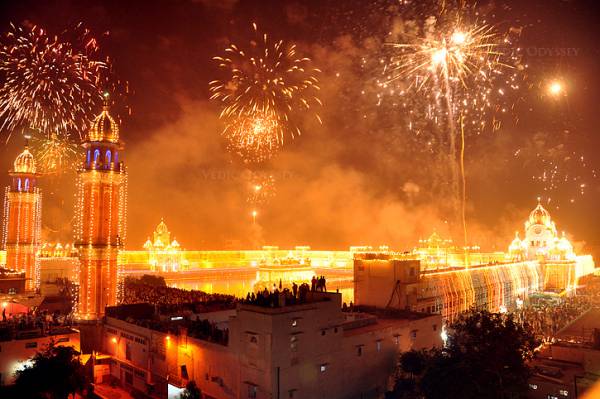
Environmental Effects of Fireworks During Diwali (from light to darkness)
Air Pollution

On this auspicious occasion unknowingly harmful gases and toxic substances released to environment by bursting fireworks such as Barium, Cadmium, Sodium, Mercury, Nitrate and Nitrite. These are called as Air pollutants. Also RSPM level goes high as small particles emitted by bursting of fireworks. RSPM means Respirable Suspended Particulate Material. Also need of electricity goes high in this period. To overcome shortage of electricity majorly electricity generated by using diesel, Coal etc. that also causes air pollution.
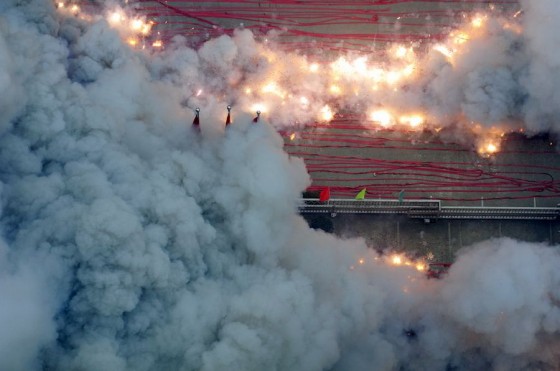
For example, CPCB data during Diwali 2023 showed particulate matter (PM 2.5) levels in several Indian cities spiking by 250-400% above safe limits, with average AQI moving from “Moderate” to “Severe.” These temporary surges can linger for 2-3 days, especially in cooler, wind-still conditions.
| City | PM2.5 (µg/m³) | Noise Level (dB) | Observed Impact |
|---|---|---|---|
| Delhi | 390 | 120 | Severe smog and visibility drop post-fireworks |
| Mumbai | 260 | 110 | AQI shifted from Moderate to Very Poor within hours |
| Kolkata | 310 | 115 | High particulate concentration in residential zones |
| Chennai | 210 | 105 | Short-term AQI rise, moderate noise exceedance |
Data indicative based on CPCB and local monitoring agency reports compiled by Perfect Pollucon Services.
Read more how to reduce particulate matter to reduce pollution

Noise Pollution – Effects of fireworks during Diwali
Bursting of fireworks not only causes air pollution but also Noise pollution. Also because of happiest festival many people use loudspeakers, loud musical instruments and advertisements that causes noise pollution. Level of noise level can go beyond 125 dB which is as loud as Military jet aircraft take-off, whereas government limits Noise level at 55dB in daytime and 45dB at night for residential area. These type of noises are very harmful for new-born babies.
Read here how Noise or sound level is monitored ?
Dry Waste
With happiness it also brings Dry waste like papers, plastics, firework covers.
A large volume of non-degradable dry waste is generated during Diwali, not just in major cities but also in smaller towns. In areas with limited disposal infrastructure, this waste can leach toxic metals into soil or block drainage systems, while in more remote zones, the environmental footprint may be less visible but still significant.
It contributes to soil pollution via non-degradable waste, and when repeated every year, the accumulated metals and chemicals may become embedded in urban soils and waterways – this longer-term contamination is far less studied.
Beyond fireworks: behaviour, waste and the psychology of celebration
The environmental footprint of Diwali extends far beyond bursting crackers – it is shaped by consumer behaviour, social expectations and festival-habits.
- Packaging & lighting waste: Festive gifting often involves elaborate packaging, non-reusable decorations and heavy use of decorative lighting. These drive energy consumption and create post-festival waste streams that are rarely tracked.
- Energy-use spikes: Homes and public places are brightly lit for extended hours. In regions depending on diesel‐generators or coal‐based power, the indirect emissions from energy use can rival those from fireworks themselves.
- Psychological and social drivers: The impulse to “celebrate big” is rooted in tradition, peer expectations, and the belief that fireworks signify joy. Even when people know the environmental harm, social norms and identity-driven behaviour often override the environmental consideration. Research in environmental psychology shows that habit, festival-induced social conformity and the temporary “exception mode” (it’s only one night) reduce the effectiveness of purely informational campaigns.
- Mental-health and social stress: While celebration brings joy, some groups may experience stress – e.g., lower-income families feeling obliged to spend heavily, those suffering from noise or air pollution in high-density areas, or elderly people facing anxiety or sleep disruption during fireworks periods. These dimensions receive little media attention but are part of the holistic impact.
A more comprehensive festival-environment analysis thus includes both the measurable emissions and the human-behavioural context that drives them – and considers how to design interventions that change habits, not just supply.
Health and Environmental Effects of Fireworks in Diwali
In these five days Fireworks are handled by kids and due to their poisonous nature many children fall ill. Poisonous gases may cause fever, Skin irritation, vomiting, Effects of Fireworks on lungs, insomnia, heart, asthma and bronchitis. Also many children face accidents due to mishandling of fireworks and it causes burning, cutting. Also it has been observed that mortality and morbidity rate increased in Diwali period because of SPM, RSPM and other harmful gases released in environment.
Loud noise of fireworks causes Temporary deafness, permanent Eardrum rupture, trauma and hypertension.
Learn Why and how Noise Impact Assessment is required for New or existing projects?
Socio-economic dimensions: industry, livelihoods & regulation
The debate around firecrackers and festival pollution also has a significant socio-economic side. For instance, the town of Sivakasi in Tamil Nadu has long been a major manufacturing hub for fireworks. Regulatory actions (fire-cracker bans, curbs on manufacture/sale) and the introduction of “green crackers” have implications for thousands of workers, many of whom are from low-income or informal backgrounds.
The shift towards greener alternatives often requires new investment, technology upgrades and training – and not all manufacturers or workers can make the transition smoothly. Reports highlight concerns such as job losses, reduced earnings, seasonal layoffs, child labour risks and the need for alternative livelihood support.
On the other hand, the aim of regulation is to reduce harmful emissions and protect public health – but the trade-off is that a policy focusing purely on pollution may overlook the social costs unless accompanied by targeted support for affected workers and communities.
A full environmental analysis would therefore include both the ecological and the socio-economic dimension: how regulation affects manufacturing, supply chains, labour markets, and local economies in the fireworks sector.
Additionally, the exposure of workers – including young apprentices – to toxic substances such as lead, mercury and nitrates highlights the need for stronger workplace safety norms and strict enforcement of labour laws.
Other effects of Fireworks
Historically, many children and workers in informal units have worked long hours ahead of Diwali in manufacturing hubs. However, beyond the manufacturing risks, there is now a transition under way – restrictions, demand shifts and introduction of green alternatives are disrupting the local economy, creating both challenges (job loss, re-skilling needs) and opportunities (safer working conditions, diversification).
Long-term & cumulative environmental impacts
Over and above the short-term spikes in air or noise pollution, fireworks and festival-related waste contribute to gradual, long-term environmental degradation. For example:
Long-term Effects of Fireworks During Diwali
- Soil & water contamination: Heavy metals (such as lead, cadmium and mercury) from firecracker residues can accumulate in soils and runoff into groundwater and surface water over many years. Studies indicate that metals deposited during festivals may persist in soils and gradually enter the food chain via plants and microbes.
- Urban biodiversity impacts: Repeated bursts of light, noise and chemical fallout affect local ecosystems – birds, bats and insects may exhibit altered migration, feeding or nesting behaviour in urban zones. Yet such persistent impacts are rarely documented in festival-studies.
- Ecosystem services disruption: Pollutants accumulating over time may reduce the capacity of urban soils to filter water, support vegetation and regulate local micro-climates – meaning the “after-festival” legacy can lead to reduced greening, higher heat-stress and greater vulnerability.
On this basis, it is important not only to measure fireworks’ immediate emissions, but to track year-on-year changes in soil, water and urban biodiversity in known festival hot-spots to assess the full environmental cost.
Regional differences & lesser-known environmental impacts
Most coverage concentrates on large urban centres (e.g., Delhi‐NCR) where smoke, smog and dense population create acute spikes in air pollution. However:
- In smaller towns or peri-urban/rural areas, the issue may be less about smog and more about weak waste-management infrastructure, open-burning of post-festival residue, and leaching of chemicals into soil and groundwater.
- Light pollution from fireworks and extensive festive lighting can disturb nocturnal wildlife, especially migrating birds or bats. While data on this effect in Indian contexts is scarce, international literature shows that bursts of light and noise can alter animal behaviour and ecosystem dynamics.
- Meteorological and topographical factors (such as valleys, coastal towns, winter inversion layers) mean that the same festival practices produce different pollution and residue-profiles depending on region – yet very few region-specific studies exist.
Therefore, broad statements about “Diwali pollution” should consider this diversity and the fact that impacts in small towns may appear less dramatic but be cumulatively significant.
Alternate ways to celebrate Diwali
It’s worth pausing to question not just our choice of fireworks, but our festival-behaviours: how much packaging we procure, how brightly we light our homes, how comfortable we are with noise and waste – and whether we can shift towards more mindful celebration.
Is this the only way to celebrate Diwali? Instead of spending too much on fireworks and considering effects of fireworks on health and environment we can buy gifts, books, gadgets or cloths which are less harmful for nature as compared to firecrackers. We can donate books or clothes for poor students. Also can conduct various competitions on environmental awareness.
Green alternatives: promise, adoption & evidence
In recent years, so-called “green crackers” have been introduced in India as a lower-pollution alternative to traditional fireworks. These are designed to emit lower particulate matter, less sulphur and limited heavy-metal content.
Yet the on-ground evidence remains mixed:
- Monitoring studies are still limited in number and many do not track full lifecycle emissions (manufacture, transport, use, residue) or cumulative effects.
- Consumer adoption remains uneven: green crackers tend to cost more or may not deliver the same “bang” or visual experience, so many users stick to conventional options.
- Enforcement and market-control challenges (counterfeits, mixing of traditional and “green” types) reduce the intended benefit.
As a result, claims that green crackers will fully mitigate pollution risks should be treated cautiously – greater transparency in monitoring, independent field-studies and uptake data are needed for a robust assessment.
While ‘green’ firecracker versions exist, they are often comparatively expensive, less familiar to consumers and only moderately adopted. The actual emission reductions achieved outside laboratory conditions are still under-evaluated. Hence, simply switching to green crackers may not fully substitute for broader behavioural or regulatory change.
- Diwali pollution isn’t just about smoke — it includes long-term soil, water, and biodiversity effects.
- Green crackers are a step forward but not a complete solution without behavioural change.
- Communities and governments must balance livelihood protection with regulation for fair transitions.
- True celebration means mindful joy — reducing waste, noise, and light pollution for a cleaner future.
From darkness to light or from light to darkness
Before lighting fireworks, let’s pause and ask – are we truly bringing light, or adding smoke to our shared sky?
True Diwali is when every lamp we light adds brightness without taking away the planet’s breath.
Share this Article with your Friends:
At Perfect Pollucon Services, our environmental experts have monitored air and noise quality across hundreds of sites for more than 25 years.
Explore our specialized guides on Ambient Air Quality Monitoring and Noise Impact Assessment to understand how compliance data is measured and managed professionally.
Celebrating Diwali with Joy and Responsibility
At Perfect Pollucon Services, we see Diwali as a celebration of light, gratitude, and new beginnings – a festival that reminds us how good always triumphs over darkness.
We are not against fireworks, religion, or any festive tradition. Like every Indian household, our team too lights diyas, shares sweets, and enjoys the festive spirit. Our message is simple – let’s celebrate in a way that keeps our air clear, our cities clean, and our future generations proud of how we evolved.
Festivals are meant to unite, not divide – and when we balance tradition with awareness, we make that unity even stronger. So go ahead, light up your homes, laugh with family, and spread joy – just with a little more thought for the environment we all share.
Team Perfect Pollucon Services wishes everyone a Happy, Bright, and Beautiful Diwali!
You would like to read about Effects of Ganapati festival on Environment
Learn more about Environmental Monitoring
Also read Environmental Impact Assessment to know about impact of new projects on environmental with respect to Air, Water, Noise and Soil.
For more details, see CPCB’s national air quality data and NEERI’s research on green crackers.
During Diwali, firecrackers release gases like sulphur dioxide, nitrogen oxides, and heavy metals such as barium and cadmium. These react in the atmosphere to form fine particulate matter (PM2.5 and PM10). Calm winter weather and low wind speed cause these pollutants to linger for days, leading to smog and poor air quality in many Indian cities.
PM10 are coarse dust particles smaller than 10 microns, while PM2.5 are fine particles smaller than 2.5 microns. PM2.5 can penetrate deep into the lungs and even enter the bloodstream. Fireworks mainly increase PM2.5 levels, which is why air quality deteriorates sharply during Diwali.
Green crackers are designed to release fewer pollutants by using alternative chemicals and lower sulphur content. However, their real-world performance varies. Studies by CPCB and NEERI show partial reduction (30–35%) in emissions, but consumer adoption remains low, and counterfeit products reduce effectiveness. They’re a step forward, but not a complete solution.
Lighting diyas made from clay, decorating with flowers and rangoli, exchanging sweets or gifts, and spending time with family are all traditional, low-impact ways to celebrate. You can also donate old clothes or food, plant saplings, or light limited, noiseless fireworks for children.
Yes. Noise levels during Diwali often cross 120 dB – far above the CPCB’s limit of 55 dB for residential areas. Prolonged exposure can cause anxiety, hypertension, hearing loss, and disturb newborns, elderly people, and pets.
CPCB guidelines cap noise at 55 dB (day) and 45 dB (night) in residential zones, and 75 dB in industrial areas. For air, PM2.5 should remain below 60 µg/m³. During Diwali, however, readings in major cities often exceed 250–400 µg/m³.
Air quality typically worsens for 2–3 days after Diwali. Pollutants like PM2.5 remain suspended in the air due to low wind speed and winter inversion layers. Noise levels drop immediately after celebrations, but air pollution and residue waste take longer to settle.
Fireworks leave behind paper, plastic, and metal debris. Much of it ends up in drains or landfills, leaching harmful chemicals into soil and groundwater. Only a small fraction is collected for proper disposal. Segregating dry waste and avoiding plastic decorations can help reduce this burden.
Yes. Loud noises and bright flashes can cause panic, hearing damage, or disorientation among pets, birds, and stray animals. Many birds abandon nests or collide with structures during firework bursts. Choosing quieter celebrations helps protect urban biodiversity.
Fireworks contribute to short-term local air pollution but don’t directly harm the ozone layer. However, the release of greenhouse gases like CO₂ and black carbon adds to climate change over time when combined with other pollution sources.
Traditional clay diyas using ghee or vegetable oil release negligible emissions compared to fireworks. However, paraffin candles or synthetic incense sticks can emit soot and volatile compounds. Natural oils or beeswax-based options are safer.
They can organize diya-lighting events, tree-planting drives, or art competitions on pollution awareness. Limiting fireworks to specific time slots or using community “green cracker zones” helps reduce local pollution and maintain festive joy responsibly.
You can use air quality mobile apps like SAFAR, CPCB’s Sameer app, or affordable air quality monitors to check PM2.5 and AQI levels in real time. PPS also offers on-site Ambient Air Quality Monitoring services for industries and residential projects.
Long-term buildup of heavy metals in soil and water can damage crops, reduce soil fertility, and affect food chains. Repeated high pollution episodes also worsen chronic diseases like asthma and heart ailments, especially among children and the elderly.
Because awareness begins with knowledge. PPS has been monitoring India’s air, noise, and water quality for over 25 years. The aim isn’t to stop celebration, but to ensure joy doesn’t come at the cost of health or environment – to make light truly overcome darkness.


![20+ Best Environmental Books (Indian & Global) [2025 List] must read environmental books - perfect pollucon services](https://www.ppsthane.com/wp-content/uploads/2024/09/must-read-environmental-books-perfect-pollucon-services.jpg)
Wonderful work. Thank you for the efforts you put in to systematically organize this factual data. India will start on the path to development when the citizens understand and follow this. It is not for nothing that India is called a third world country. We are only literate not educated.
It pushesh animals at high risks….it harms a lot to animlals , birds…think of them !
Nice Web site giving proper service to us , many time it helps to me very nicely .
Good and we have educate illiterate. but bad thing is educated people are still doing what is bad and not doing what is right