
Skip to content
Skip to content
Welcome to Perfect Pollucon LLP Office Hours: 10:00am-7:00pm
Perfect Pollucon Services - Environmental Consultancy and Environmental Monitoring Services

Perfect Pollucon LLP

Environmental Consultant & Laboratory

Call Us 9967436537
Mail Us [email protected]
Maharashtra, India 3 Krishna Koyna B, Majiwada, Thane W
  • Home
  • Monitoring Services
    • Ambient Air Quality Monitoring & Testing
    • Indoor Air Quality Monitoring & Testing
    • Air Quality Monitoring & Testing
    • Stack Emission Monitoring & Testing
    • Noise Level Monitoring & Testing
    • Food Testing Laboratory Services
    • Fugitive Emission Monitoring & Testing
    • Soil Testing & Investigation Laboratory
    • Drinking Water Quality Testing & Analysis Laboratory
    • Corrosion Testing Services
    • Illumination Survey / Lux Monitoring
    • Ventilation Survey
  • Consultancy Services
    • Environmental Impact Assessment
    • Environmental Statement Form V
    • MPCB Consent to Establish, Operate and Renewal
    • Operation and maintenance of Effluent Treatment Plant
    • Effluent Treatment Plant Design
    • Six Monthly EC Compliance Report
    • Self Audit Report MPCB
    • Environmental Compliance
  • Industries
    • Pharmaceutical Industries
    • Chemical and Petrochemical Industry
    • Construction & Real Estate
    • Oil and Gas Or Petroleum Industry
    • Manufacturing / Production Industry
    • Corrosion Control at Data Center / IT Industry
    • Mining and Mineral Extraction
    • Food & Cold Storage Industry
    • Supply Chain & Warehouses
    • Data Centres
    • Railways & Metro Projects
    • Hospitality & Tourism
    • Retail and Shopping Malls
  • Blog
  • Tools
    • Air Monitoring Calculators
    • Stack Monitoring Calculators
    • Noise Monitoring Calculators
    • Carbon & Energy Footprint Calculators
    • Lux & Illuminance Calculators
    • ETP & STP Calculators for Form-V
    • ETP Design Calculators
  • About Us
    • Vision
    • Why We Built EHSSaral?
    • Our Work and Clients
    • Case Studies
    • Testimonials & Leave Us a Review
    • Trusted Partners
    • Careers
    • Guest Posting – Write for Us
    • Press Release
    • Our Features
  • Contact Us
REQUEST A QUOTE
Stack Emission Monitoring Procedure
PPS Team

Stack Emission Monitoring Procedure

🌱 Last updated: April 10, 2025

Stack Emission monitoring procedure includes tasks of Measurement, testing, sampling and analysis. Onsite determination of physical parameters of flue gases such as temperature, flow and pressure also involved in Stack emission monitoring.

Air Quality is a major environmental responsibility for all manufacturing industries. Those industries can use air quality monitoring or stack monitoring to measure the degree of pollutants or contaminants present in the current exhaust air and take the required steps to reduce them.

All industries must have a sampling port built into their stack and a permanent sampling platform to ease the Stack Emission Monitoring Procedure for environmental consultants who perform monitoring of stack emission.
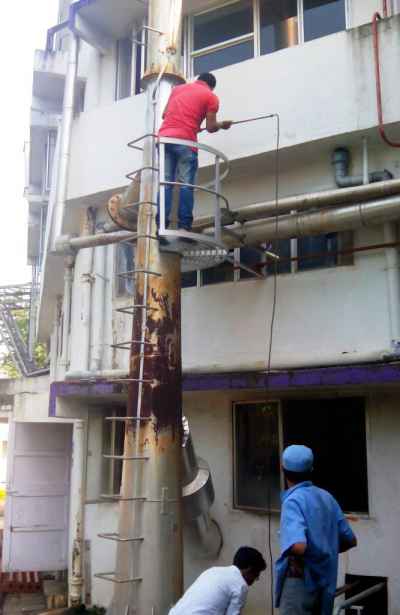
Purpose of Stack Emission Monitoring

The primary purpose of stack emission monitoring is to:

  • Ensure regulatory compliance: Most countries have stringent environmental regulations in place to control industrial emissions. Regular monitoring ensures that industries comply with these standards.
  • Reduce environmental impact: By measuring pollutants released into the air, industries can take corrective measures to minimize their environmental footprint.
  • Promote public health and safety: Harmful gases such as SO₂, NOx, and PM can have serious health impacts on nearby communities. Monitoring emissions helps in reducing these risks.
  • Facilitate operational efficiency: Monitoring can identify inefficiencies in processes, allowing industries to make adjustments that reduce emissions and improve performance.

Key Pollutants Monitored in Stack Emissions

There are several common pollutants that are regularly monitored in stack emissions:

  • Particulate Matter (PM): Fine particles, often from burning fuels or industrial processes, can penetrate the respiratory system, causing health issues.
  • Sulfur Dioxide (SO₂): This gas is primarily emitted from the combustion of fossil fuels. It can lead to acid rain and respiratory issues.
  • Nitrogen Oxides (NOx): NOx gases are produced during combustion and contribute to smog formation and respiratory problems.
  • Carbon Monoxide (CO): Produced by incomplete combustion of carbon-based fuels, CO is harmful when inhaled and contributes to air pollution.
  • Volatile Organic Compounds (VOCs): These organic chemicals evaporate easily and contribute to air pollution and smog formation.
  • Greenhouse Gases (GHGs): CO₂, CH₄, and other greenhouse gases trap heat in the atmosphere, contributing to global climate change.
📄 Want to see how we handled a real stack emission issue with DG sets? Read our case study here.
Stack Monitoring
Stack Monitoring

Read More about Stack Emission Monitoring

Stack Emission Monitoring Procedure

Selection of Sampling Site in Stack Emission Monitoring Procedure

The objective of sampling in the Stack Emission Monitoring Procedure is to determine the accurate degree of pollutants present in the air emitted from the stack. Laminar flow should be present in the stack to get accurate readings.

Stack identification: The specific stack to be monitored must be identified. This usually involves studying the industrial process to determine which stack is responsible for significant emissions.

Sampling location: Choose a location on the stack that is accessible and provides representative samples. The location should be far enough from bends or obstructions to avoid turbulence that could affect the sample.

Equipment setup: Install the necessary monitoring equipment, such as sampling probes, analyzers, and flow meters, at the chosen location.

To select a representative sample sampling point should be at least eight stack diameter downstream and two-stack diameter upstream from any joint, bend, expansion and contraction.

Also Read How to calculate DG or Boiler Stack Height as per CPCB Guidelines

Traverse Points

As per new Notifications, all stacks must have a sampling post and sampling platform. The location of traverse points will be decided by the pollution control board.

After previous criteria met, to determine the minimum traverse points required the first diameter of the stack is to be calculated in the case of a circular stack. Also, it should be far 3cm from the stack wall.

View this post on Instagram

A post shared by Perfect Pollucon Services (@perfectpolluconservices)

Know more about how to select Traverse Point in stack monitoring

Stack Emission Monitoring Procedure Download files (PPT and PDF)

You can download Stack Emission Monitoring Procedure files from here:

Stack-Emission-Monitoring-Procedure-PPTDownload
Stack-Emission-Monitoring-Procedure-PDFDownload

Molecular Weight Determination

Molecular weight can be found by drawing a known amount of gas into a gas chromatograph or Orsat apparatus. Moisture should be found. Molecular weight can be calculated by knowing gas components.

The average molecular weight can be determined by using the below-mentioned formula:

M = ∑ (i=1)^n (xi Mi)
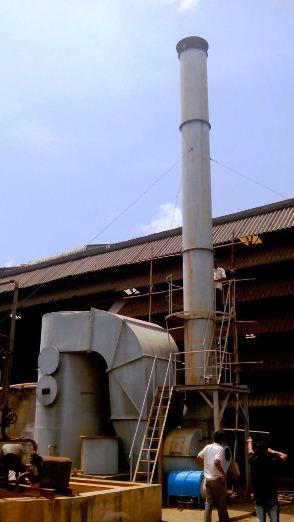
Stack Emission Monitoring procedure

X is the mole fraction and Mi is mole weight of each constituent in a mixture of a several constituent.

Velocity Determination

Once the Pitot tube is connected Dynamic and static pressure is found using a manometer. Also, the Temperature inside the duct is measured. The velocity of gas and amount of air can be found using the formula

Learn the Advantages of Stack Emission testing

You can also use our stack monitoring calculators to calculate the velocity of gases online.

Moisture Determination

Moisture can be determined by dry and wet bulb temperature and the referring to the psychometric chart. Also, the condenser method works well for almost all gas streams and comparatively easy to perform.

Condenser Method to determine Moisture in a Gas Dtream

In this process sample of the stack is extracted through a filter to remove particulate matter than through the condenser, collecting the condensate formed in the process and then it is measured.

Wet/Dry Method to Determine Moisture in Gas Stream

The equilibrium temperature attained by water which is vaporizing into a gas of constant composition and the constant dry bulb is called wet-bulb temperature. The amount of depression of wet bulb temperature below the dry bulb is the saturation degree of humidity of the gas. Hence, the moisture content of gas can be determined by using the wet and dry bulb method.

Sample Recovery

After the sample has cooled, brush down the dust on side of the nozzle into a thimble and replace it in a labelled container.

Sampling and Analysis

  • Isokinetic sampling: For particulate matter, carefully insert the sampling probe into the stack at the desired location. Maintain the same velocity between the gas in the stack and the sample being drawn to ensure accurate results.
  • Gas sampling: For gases like SO₂ and NOx, a non-isokinetic method is used, where gas is drawn into a collection device, often through an impinger or filter.
  • Sample preservation: Once the samples are collected, preserve them carefully for laboratory analysis. For gases, ensure that the sample bottles are sealed properly, and for particulate matter, store the filters in a clean environment to avoid contamination.
  • Laboratory analysis: Transport the samples to a laboratory for detailed analysis. The lab will use a variety of techniques, such as gas chromatography or mass spectrometry, to identify and quantify the pollutants in the sample.

Reporting and Documentation

  • Data analysis: Analyze the data to calculate the concentration of pollutants and compare it to regulatory limits. This involves using mathematical equations to account for variables such as gas flow rate, stack temperature, and pressure.
  • Reporting: Prepare a detailed report for regulatory authorities, which includes the methods used, results, calibration data, and any deviations or abnormalities during the sampling process.
  • Record-keeping: Maintain a log of the monitoring results for future reference. This is important for auditing and ensuring long-term compliance.

Read more about CPCB Guidelines for Stack Monitoring

Stack emission monitoring is an essential process for ensuring that industrial emissions are within acceptable limits and do not pose a threat to the environment or public health. Whether through continuous systems like CEMS or manual sampling techniques, industries must adhere to rigorous procedures to measure and control pollutants. By following the correct methodologies, calibrating equipment properly, and accurately analyzing data, industries can reduce their environmental impact and ensure compliance with local and international regulations.

This blog is written by Perfect Pollucon Services. They offer Environmental services in India including Consultancy and Monitoring Services.

What are the parameters for stack emission monitoring?

The key parameters for stack emission monitoring include Particulate Matter (PM), Sulfur Dioxide (SO₂), Nitrogen Oxides (NOx), Carbon Monoxide (CO), Oxygen (O₂), and Carbon Dioxide (CO₂). Additional pollutants such as Volatile Organic Compounds (VOCs) and Heavy Metals (e.g., Mercury, Lead) may also be monitored based on regulatory requirements.

What is the process of stack emission?

Stack emission refers to the release of combustion gases and particulate matter from industrial sources like boilers, furnaces, and diesel generators through a chimney or stack. These emissions are monitored and regulated to ensure compliance with environmental standards.

What are the stack monitoring standards as per CPCB?

The Central Pollution Control Board (CPCB) prescribes standards for various industries based on emission limits for pollutants such as PM, SO₂, and NOx. CPCB also provides guidelines on the frequency, methodology, and permissible limits for stack emissions.

What is the method for stack gas measurement?

Stack gas measurement is typically conducted using isokinetic sampling, continuous emission monitoring systems (CEMS), or grab sampling methods. Instruments such as gas analyzers and particulate samplers are used to quantify pollutants.

What is the limit of stack emission?

Stack emission limits vary by industry and fuel type but typically include PM < 50 mg/Nm³, SO₂ < 100 mg/Nm³, and NOx < 600 mg/Nm³ for industrial boilers, as per CPCB norms.

What is the limit of NOx in CPCB?

For most industries, CPCB limits NOx emissions to 450–600 mg/Nm³, while stricter standards apply to newer installations.

What is a stack test?

A stack test is an official performance assessment of an industrial emission source, conducted using standard methods to determine pollutant levels in exhaust gases.

Related Posts:

  • Ambient Air quality Monitoring Service by Perfect Pollucon Services
    Ambient Air Quality Monitoring & Testing
  • Stack Emission
    Stack Emission Monitoring & Testing
  • Air Quality monitoring
    Air Quality Monitoring & Testing
  • ventilaton survey or air change survey by Perfect Pollucon Services
    Ventilation Survey
  • Ambient Air Sampling - Grab sample - Perfect Pollucon Services
    Ambient Air Sampling Methods
  • Environmental Monitoring Methods - Perfect Pollucon Services
    Environmental Monitoring Methods
  • How to measure Indoor Air Quality - Perfect Pollucon Services
    How to Measure Indoor Air Quality?
  • Indoor Air Quality Monitoring & testing
    Indoor Air Quality Monitoring & Testing
  • Ambient and in-plant workzone noise level monitoring by Perfect Pollucon Services V1
    Noise Level Monitoring & Testing
  • Air Quality monitoring Station
    Ambient Air Quality Monitoring Guidelines CPCB
  • Continuous Ambient Air Quality Monitoring Systems (CAAQMS) by Perfect Pollucon Services
    Continuous Ambient Air Quality Monitoring System (CAAQMS)
  • workzone monitoring as per factory act, methods and standards - Perfect Pollucon Services
    Workzone Monitoring

Post navigation

Environmental Monitoring Methods
Effects of Ganapati Festival

4 thought on Stack Emission Monitoring Procedure

  1. FARHAD says:
    at

    Hi ,

    Basically we are a Environmental consultants based in UAE. We have some projects as Stack/Soil/Noise air monitoring in Saudi,Oman&Abudhabi with our clients.we are looking for a subcontract team to do this projects.
    We required your service team to do the work completion for different projects based in Middleast.if your company have interest with those projects please revert back soon.

  2. Ebenezer Quadzie says:
    at

    Please can we team up for Environmental projects in Africa or West Africa?
    NEMAS Consult Limited has well equipped environmental monitoring equipment and qualified personnel’s to carry out any environmental projects

Comments are closed.


0 / 180

Environmental Monitoring Services

  • Ambient Air Quality Monitoring & Testing
  • Indoor Air Quality Monitoring & Testing
  • Air Quality Monitoring & Testing
  • Fugitive Emission Monitoring & Testing
  • Stack Emission Monitoring & Testing
  • Food Testing Laboratory Services
  • Noise Level Monitoring & Testing
  • Corrosion Testing Services
  • Ventilation Survey
  • Illumination Survey

Search

Download Our Brochure (682 kb)

Download Our Company Brochure

WhatsApp Chat with Perfect Pollucon Expert

Recent Posts

  • Top 15 Field Failures in Stack Monitoring & How to Prevent Them | Expert Guide
  • Dehumidifier Maintenance & Cleaning Tips for Indian Homes | Expert Guide by PPS
  • Understanding Ideal TDS, Hardness & Microbial Load in Water
  • Dehumidifier vs Air Purifier vs Humidifier: Expert Indian Guide
  • IAQ Testing for LEED & WELL Building | PPS Expert Guide
  • EC Compliance Report 2025 – Expert PPS Guide
  • RO vs UV vs UF Water Purifier: Which is Better in India?
  • Best Water Purifiers for Home in India (2025) – Lab Tested Reviews
  • How to Fill E-Waste Form 3 Annual Return (Step-by-Step)
  • SPCB Environmental Compliance Forms – The Ultimate Guide

Environmental Consultancy Services

  • Environmental Monitoring and Assessment
  • Environmental Impact Assessment
  • Effluent Treatment Plant
  • Effluent Treatment Plant Design
  • Consent to Establish, Consent to Operate and Renewal
  • Six Monthly EC Compliance Report
  • Self Audit Report MPCB
  • Environmental Compliance in India
  • Ventilation Survey
  • Tools
  • HTML Sitemap

Environmental Consultancy Services

  • Environmental Monitoring and Assessment
  • Environmental Impact Assessment
  • Effluent Treatment Plant
  • Effluent Treatment Plant Design
  • Consent to Establish, Consent to Operate and Renewal
  • Six Monthly EC Compliance Report
  • Self Audit Report MPCB
  • Environmental Compliance in India
  • Ventilation Survey
  • Tools
  • HTML Sitemap

Environmental Monitoring Services

  • Ambient Air Quality Monitoring & Testing
  • Indoor Air Quality Monitoring & Testing
  • Air Quality Monitoring & Testing
  • Fugitive Emission Monitoring & Testing
  • Stack Emission Monitoring & Testing
  • Food Testing Laboratory Services
  • Noise Level Monitoring & Testing
  • Corrosion Testing Services
  • Ventilation Survey
  • Illumination Survey

About Us

  • Home
  • Blog
  • Our Vision & Mission
  • About Us
  • Case Studies
  • Industries We Serve
  • Write for Us | Guest Posting
  • Privacy Policy
  • Terms and Conditions
  • Explore our EnviroTech platform: EHSSaral.com

Registered Office

Perfect Pollucon Services – Environmental Consultancy Company
3 Krishna Koyna B, Majiwada Thane,
Maharashtra, India
400601
Email: [email protected]
Phone :
+91 9930 180 059
+91 7045 651 859
Perfect Pollucon Services (proprietorship firm reg. 2009) is now Perfect Pollucon LLP (CIN : ACP-2349) (reg in Jun’2025)

  • Privacy Policy
  • Terms and Conditions
  • Contact Our Experts
  • Sitemap
@Copyright Perfect Pollucon Services
Stack Emission Monitoring Procedure